Nasim Pirhadi
The Pit
May 16 to September 5, 2026
Curated by Craig Willms
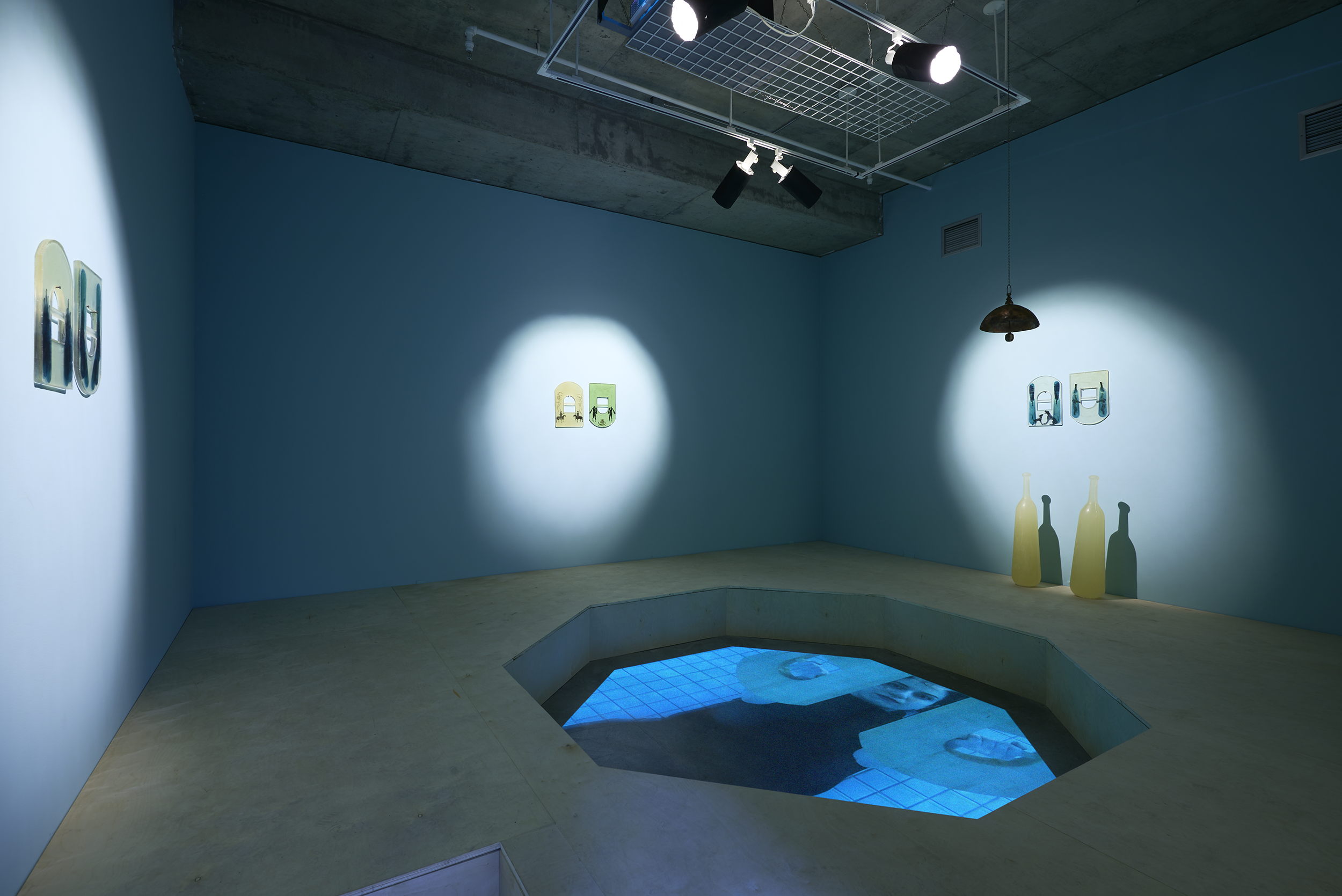
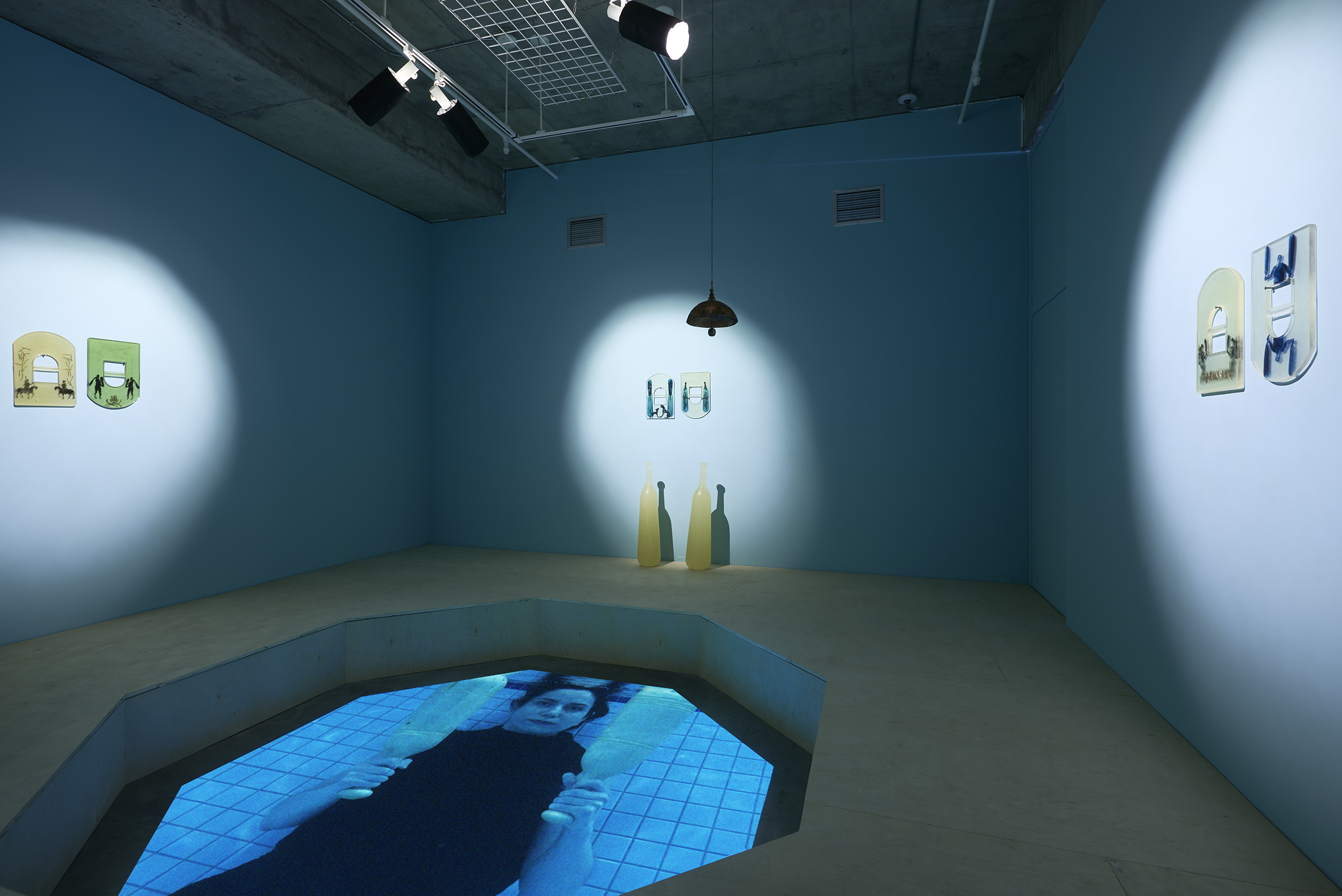
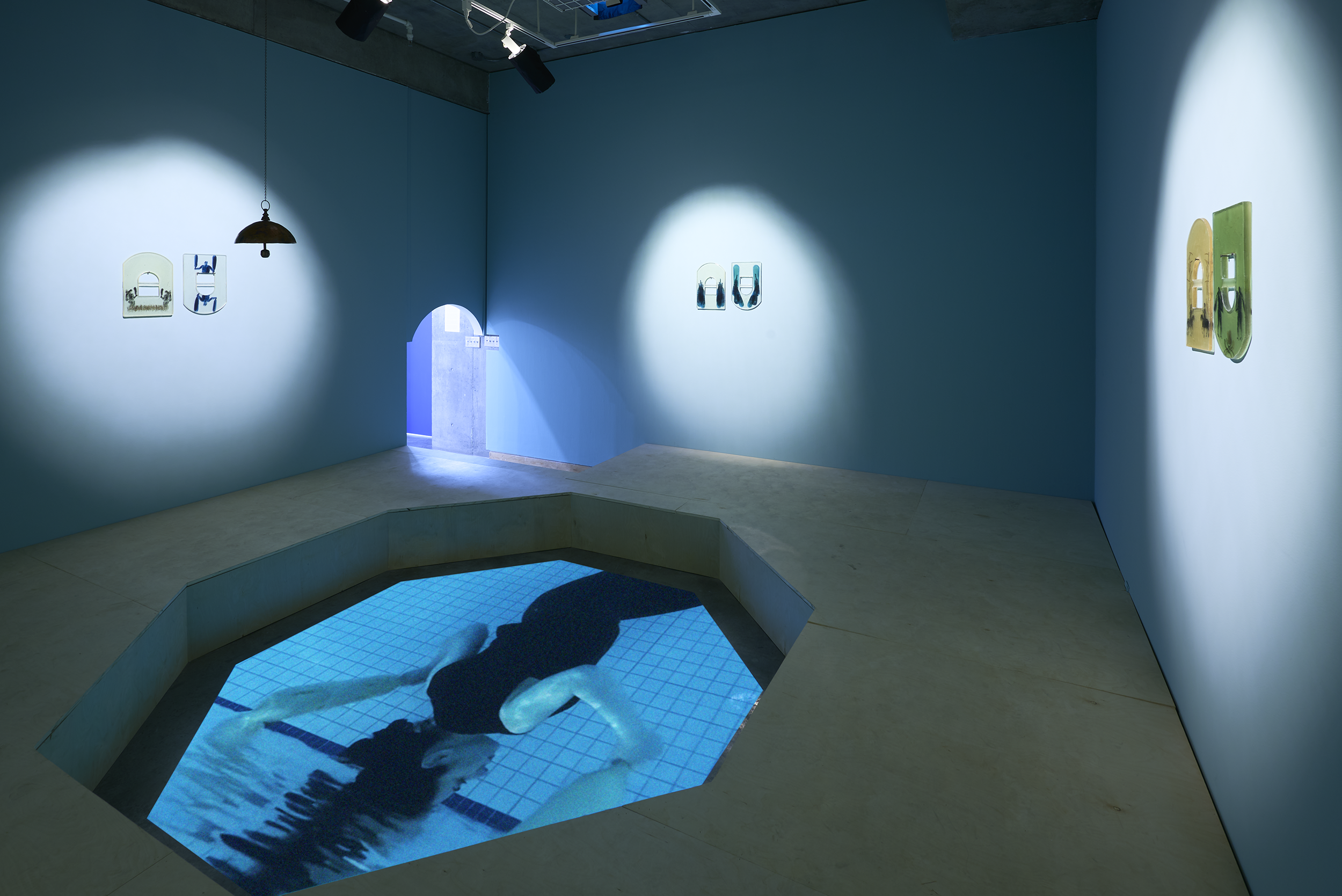
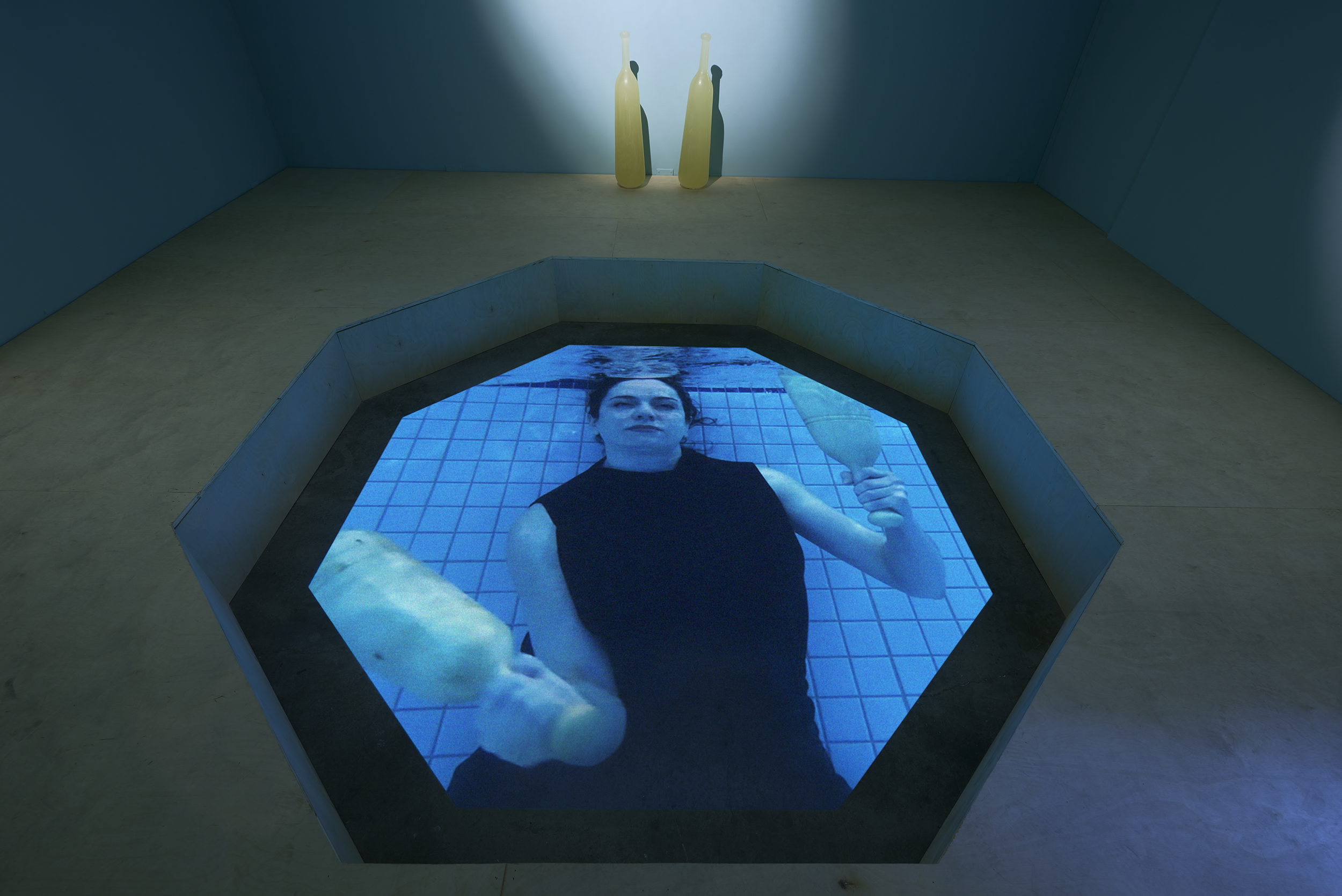
In a new body of work, The Pit, Nasim Pirhadi transforms the architecture of The Cube to resemble a traditional Iranian gym, known as a zurkhaneh (meaning “house of strength”). Pirhadi’s recreated space allows access to all genders and belief systems, defying patriarchal tradition, which forbids admittance to the zurkhaneh by women and non-Muslims. Speaking to the patriarchal values of her Iranian homeland and the actions women like herself are taking to overcome these barriers, The Pit offers a site of resistance, contemplation, and strength.
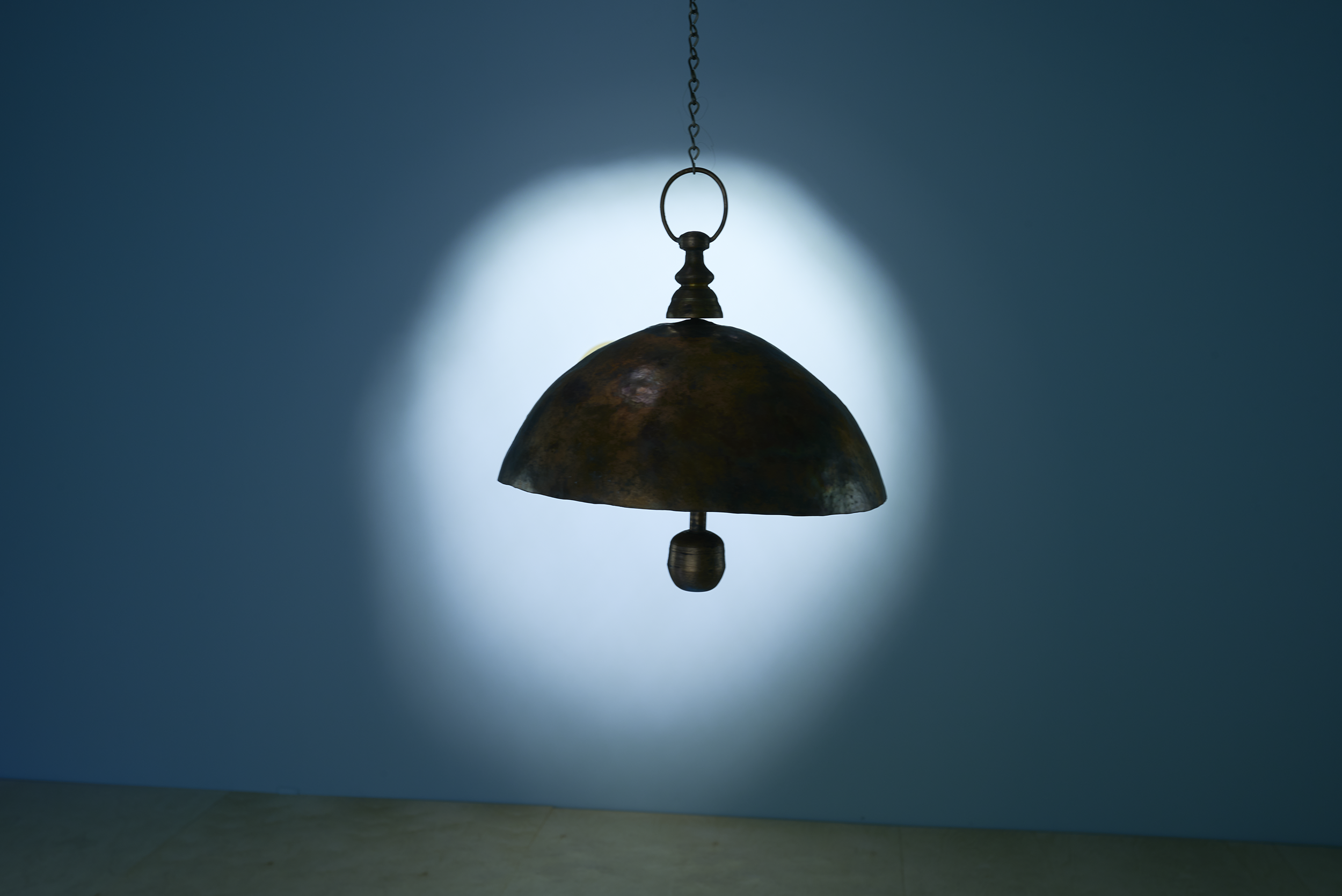
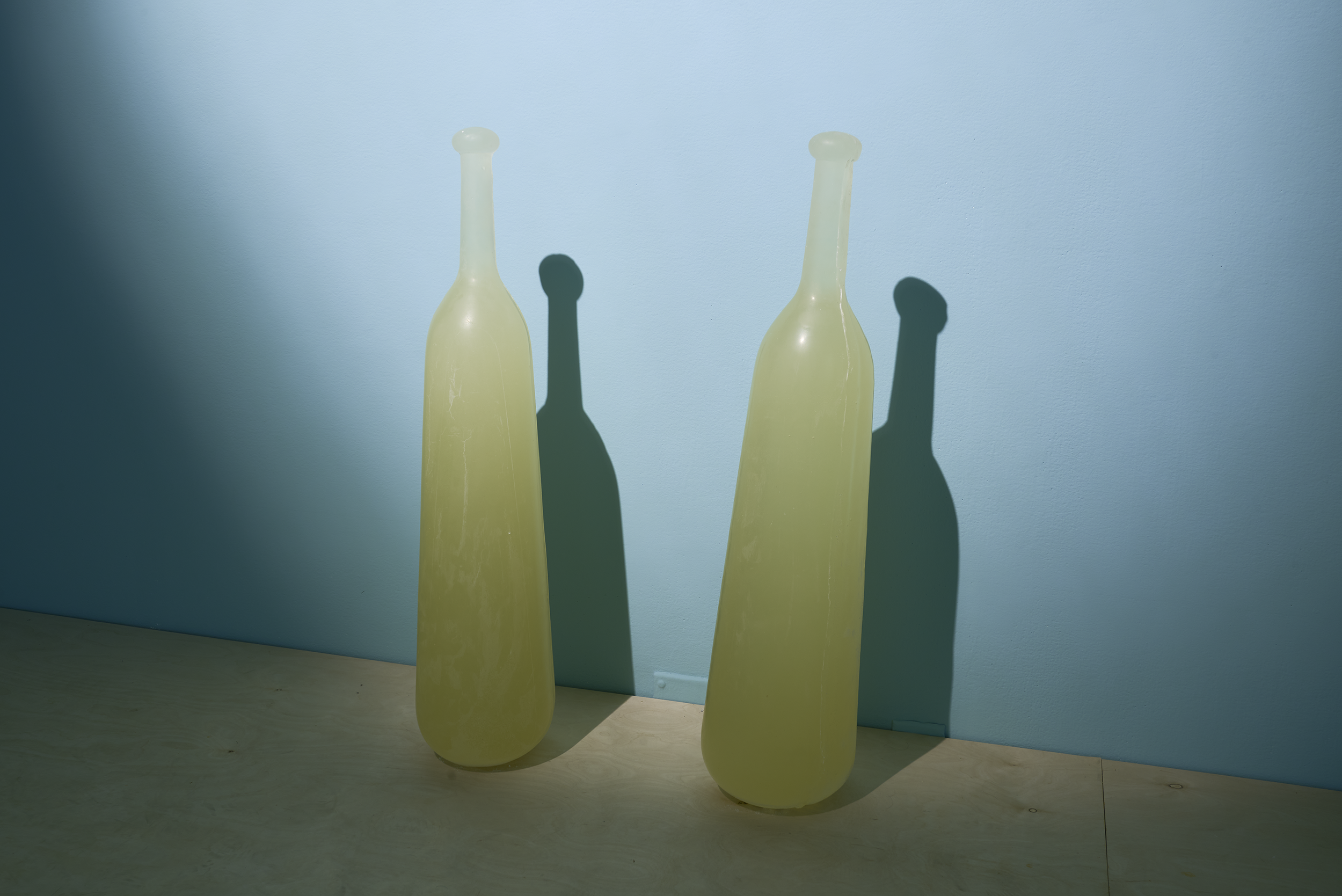
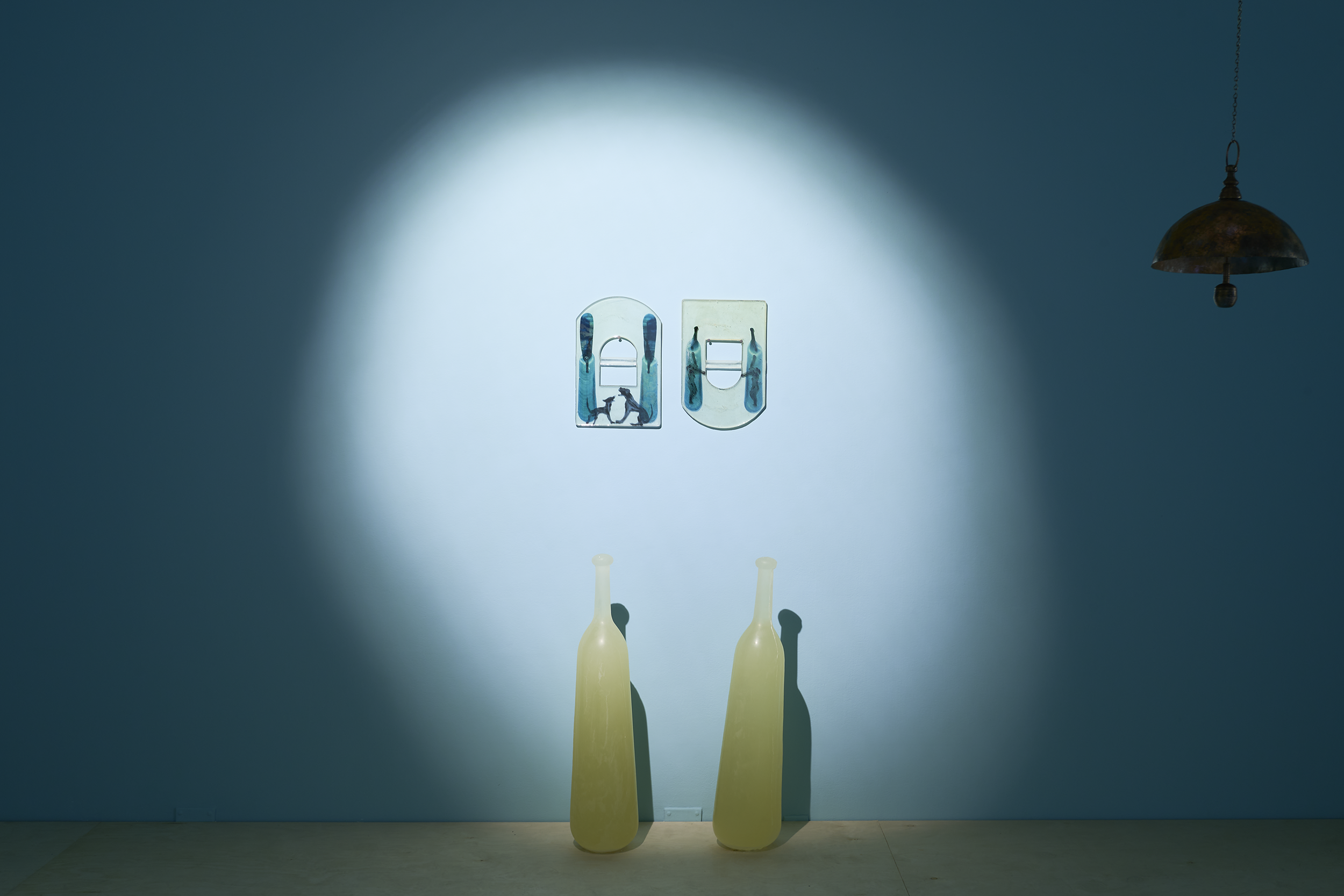
An historically sacred space, the entrance to the zurkhaneh is intentionally low to force men to bow in respect as they enter. Pirhadi echoes this convention and adds a layer of complexity by raising the floor, requiring viewers to move carefully and with intention as they cross the threshold. Upon entering, guests encounter a pair of mil (heavy wooden clubs) and the scent of roses emanating from a diffuser. Cast in a sugar mixture, Pirhadi has transformed exercise equipment into sculptural objects and recontextualized the training space into a place for contemplation.
The title of the exhibition refers to the gowd (pit), a sunken octagon found in the center of the zurkhaneh. The pit is a space that tests mental and physical strength and endurance. Male warriors push the limits of their minds and bodies as they go through the zurkhaneh rituals using mil and sang (wooden shields). Here, Pirhadi positions herself in the pit through a video projection, in which she subverts the traditionally male arena with her female form. In the video she wields mil and sang underwater as she puts herself through the rigorous movements of the zurkhaneh, traditionally known as varzesh-e-bastani. Using humour and empathy, Pirhadi illustrates how these actions become complicated when faced with physical, cultural, or societal barriers.
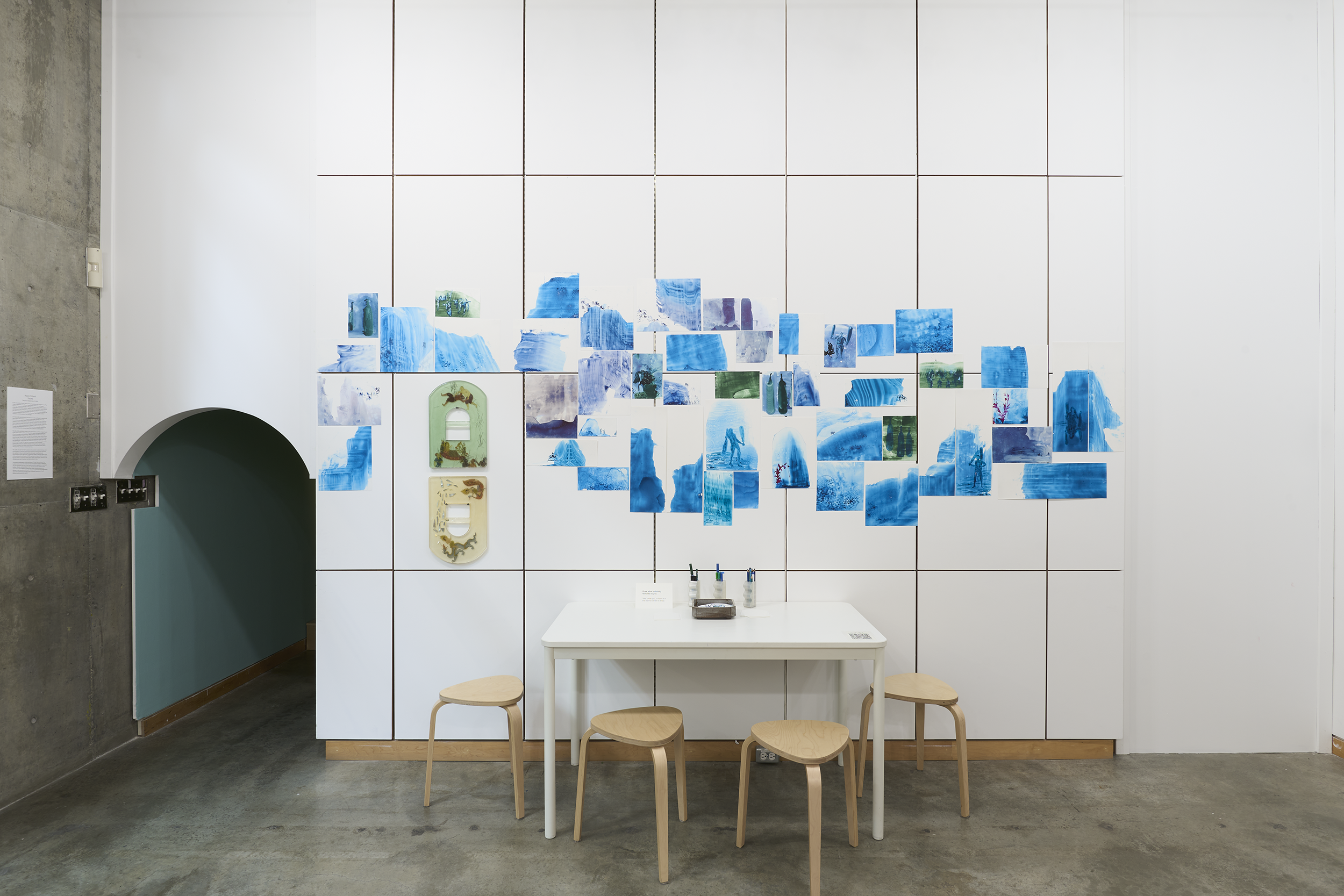
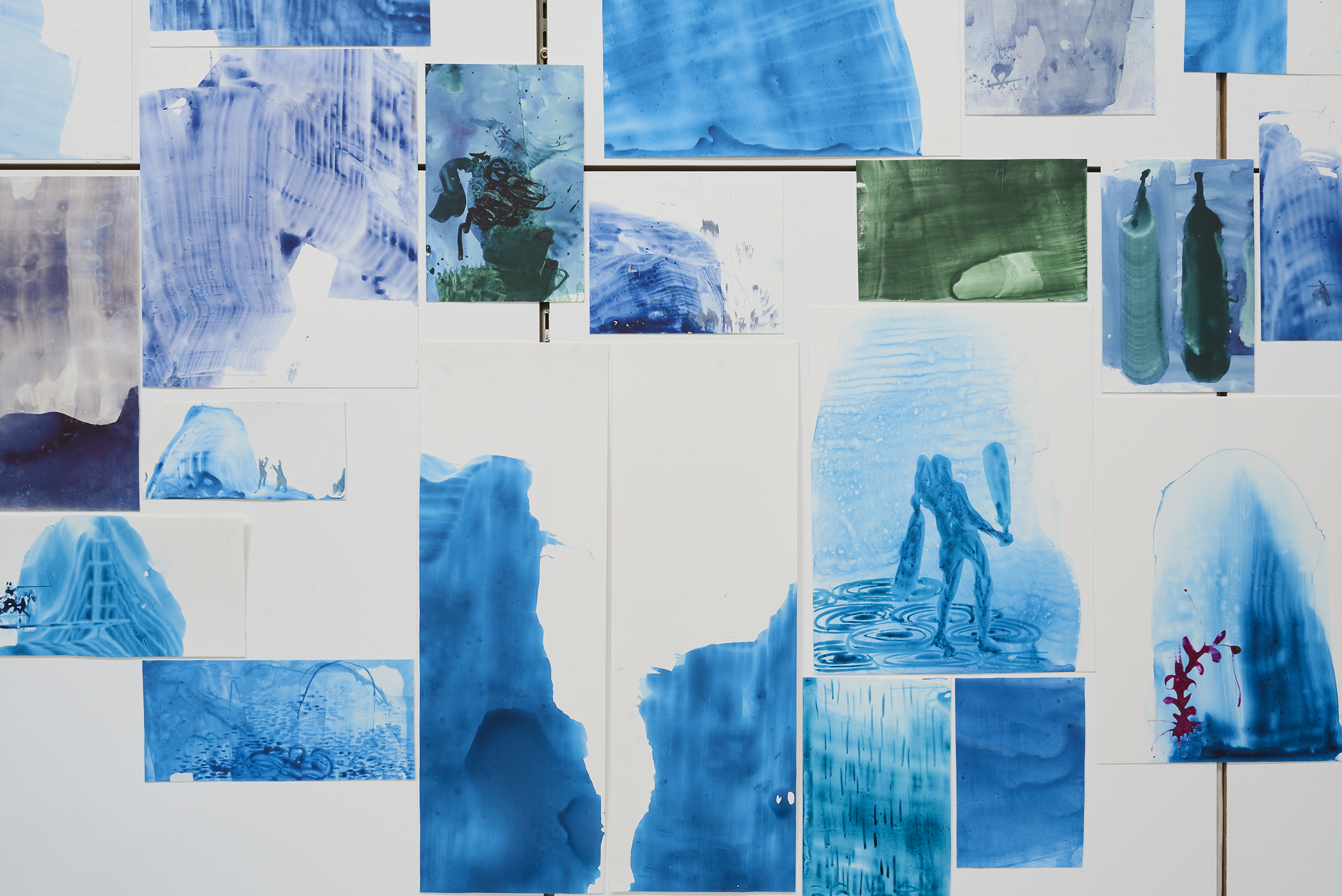
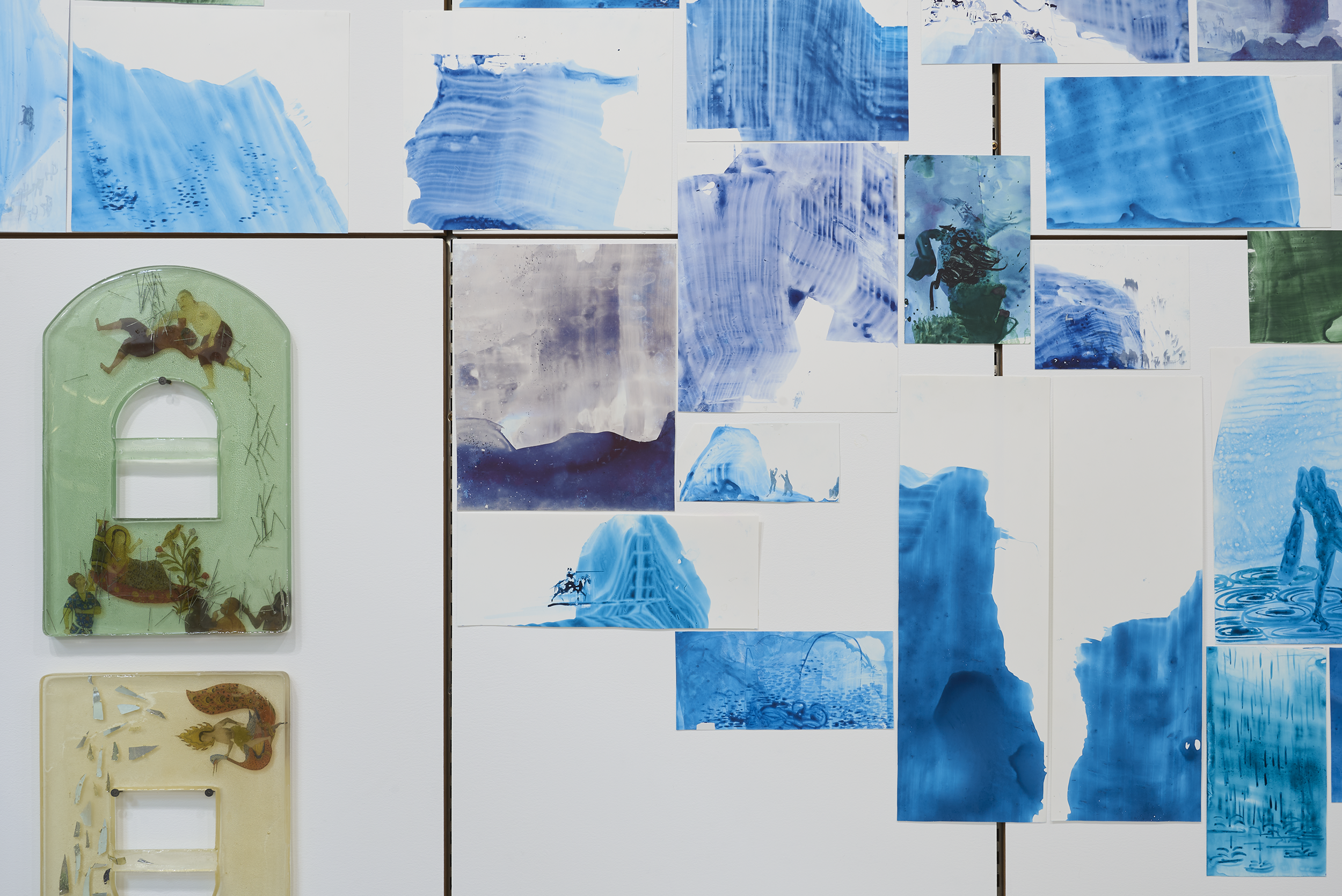
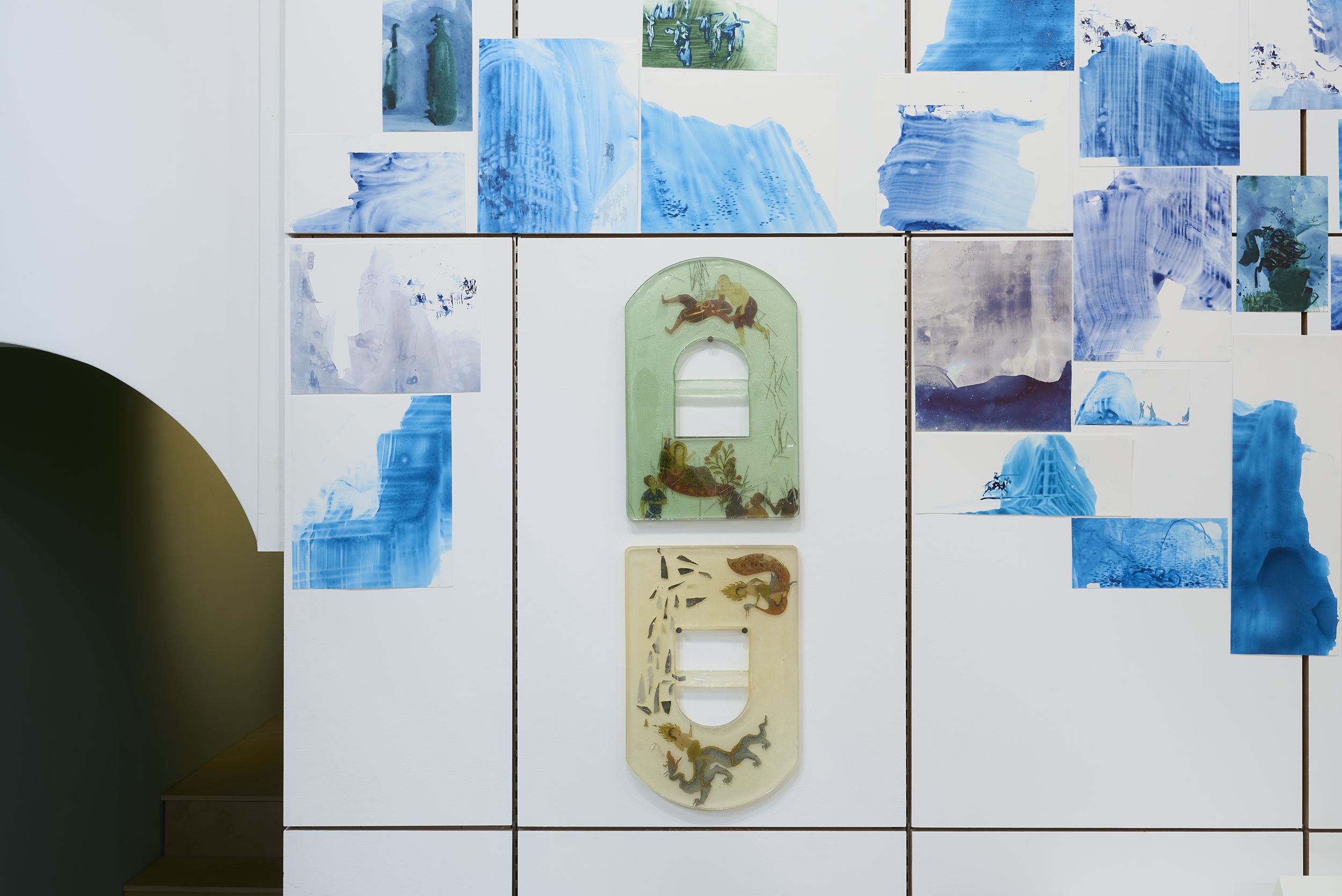
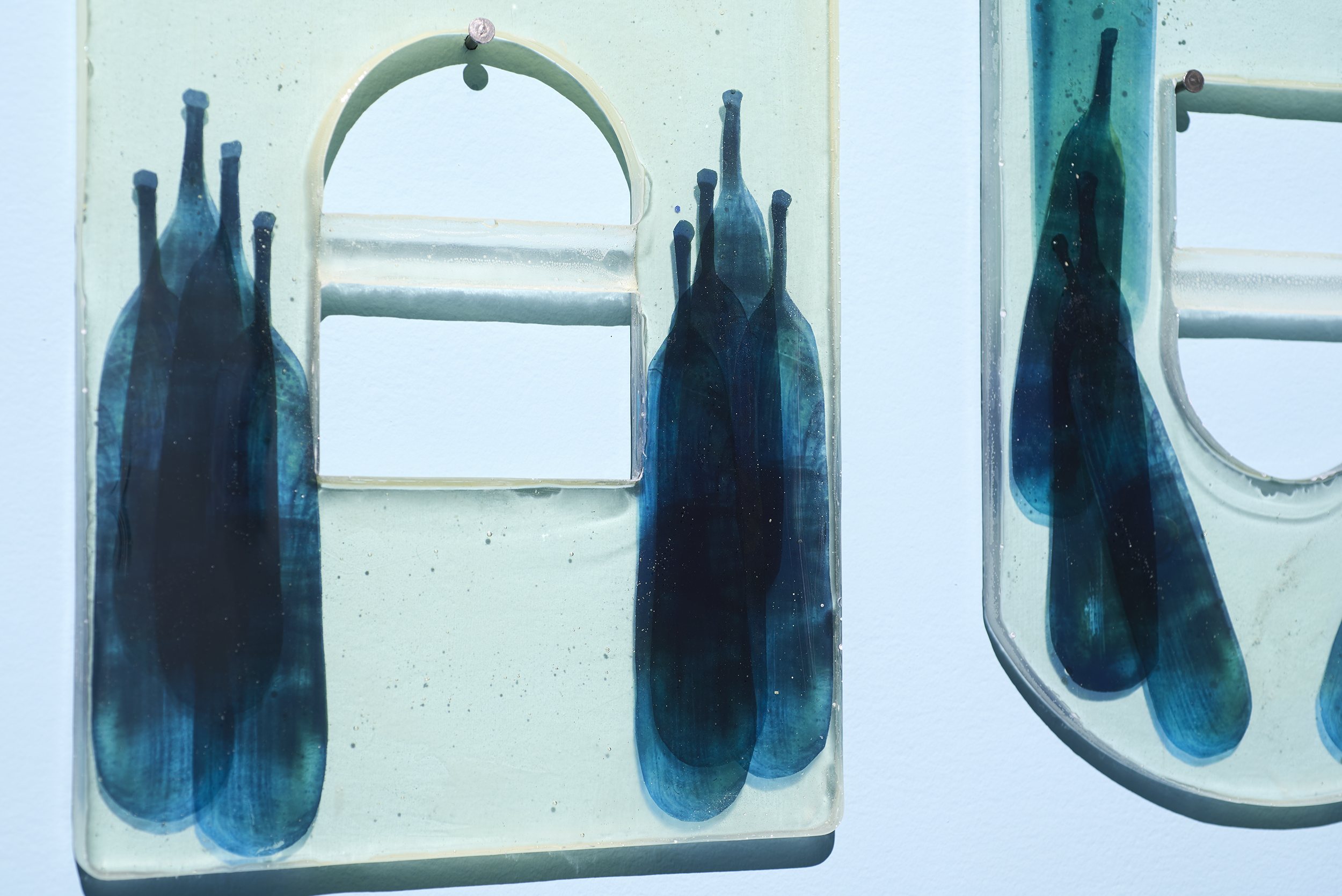
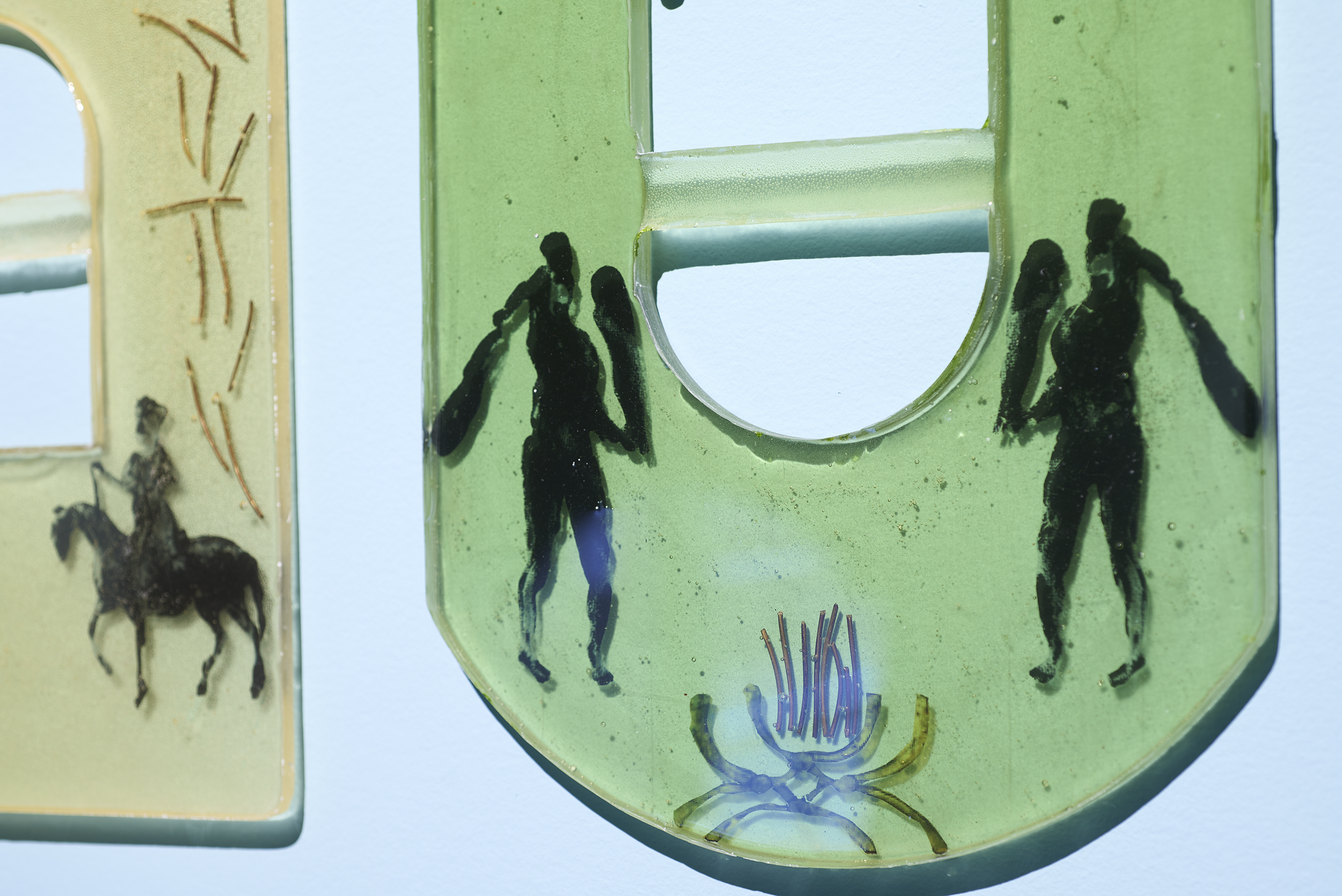
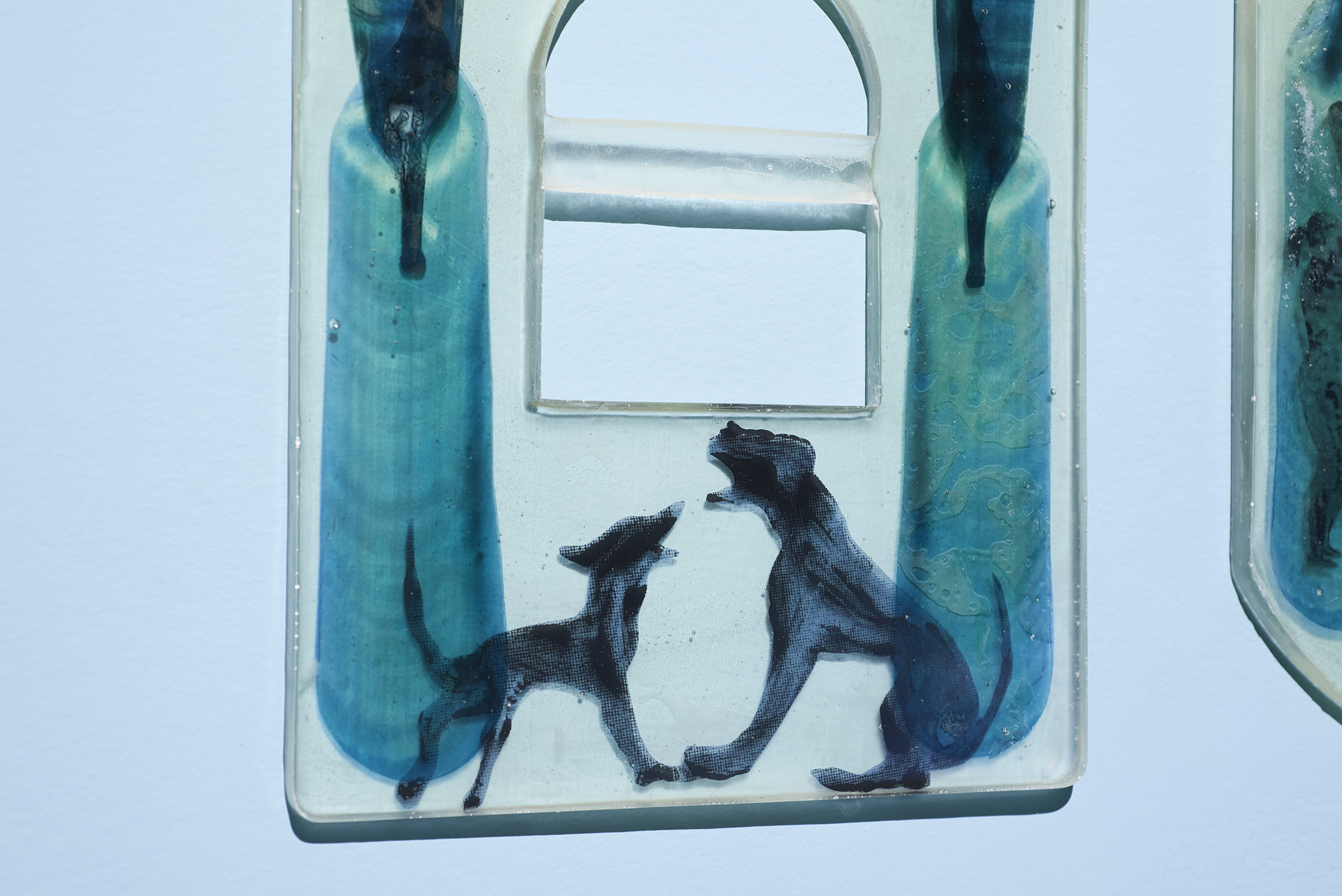
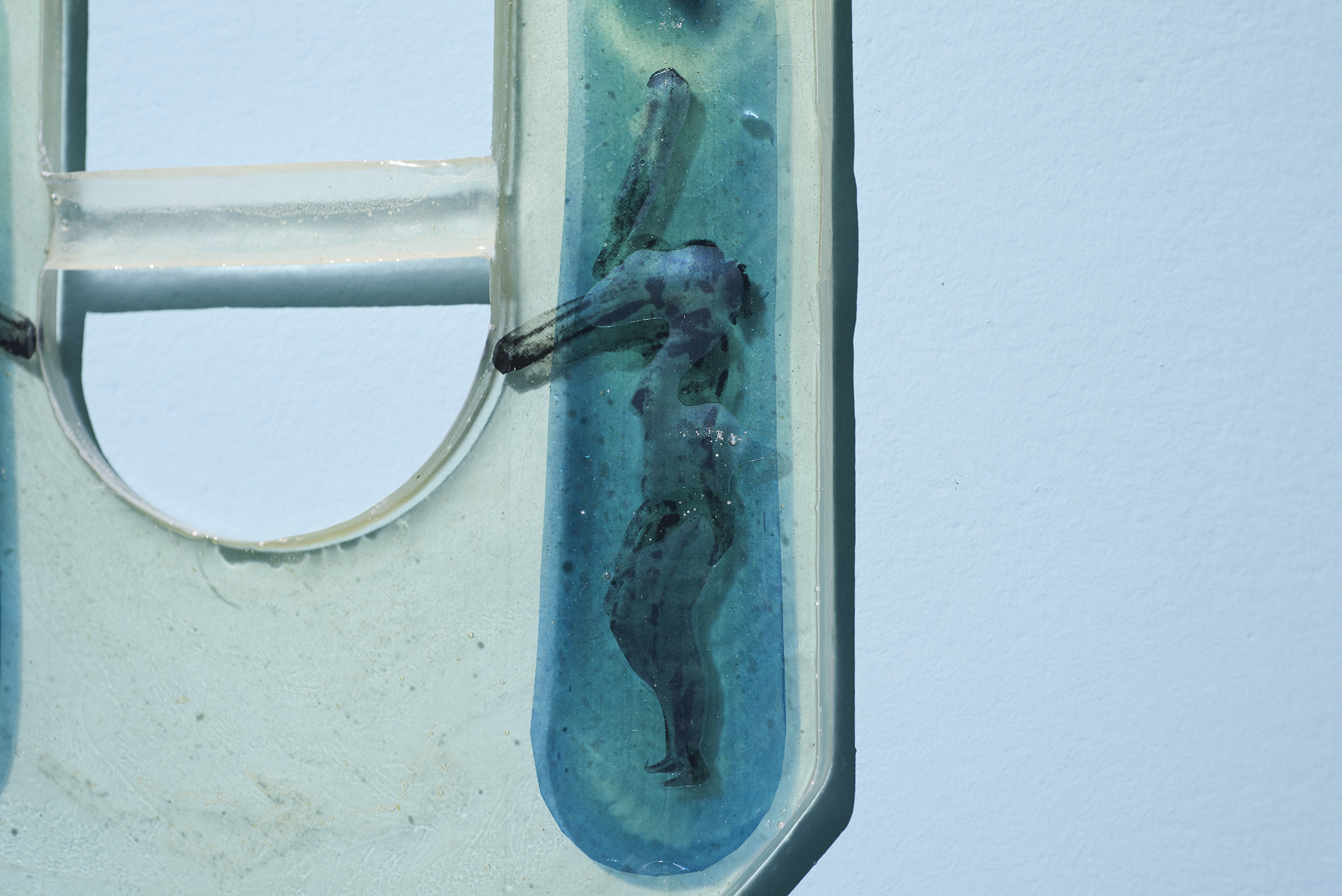
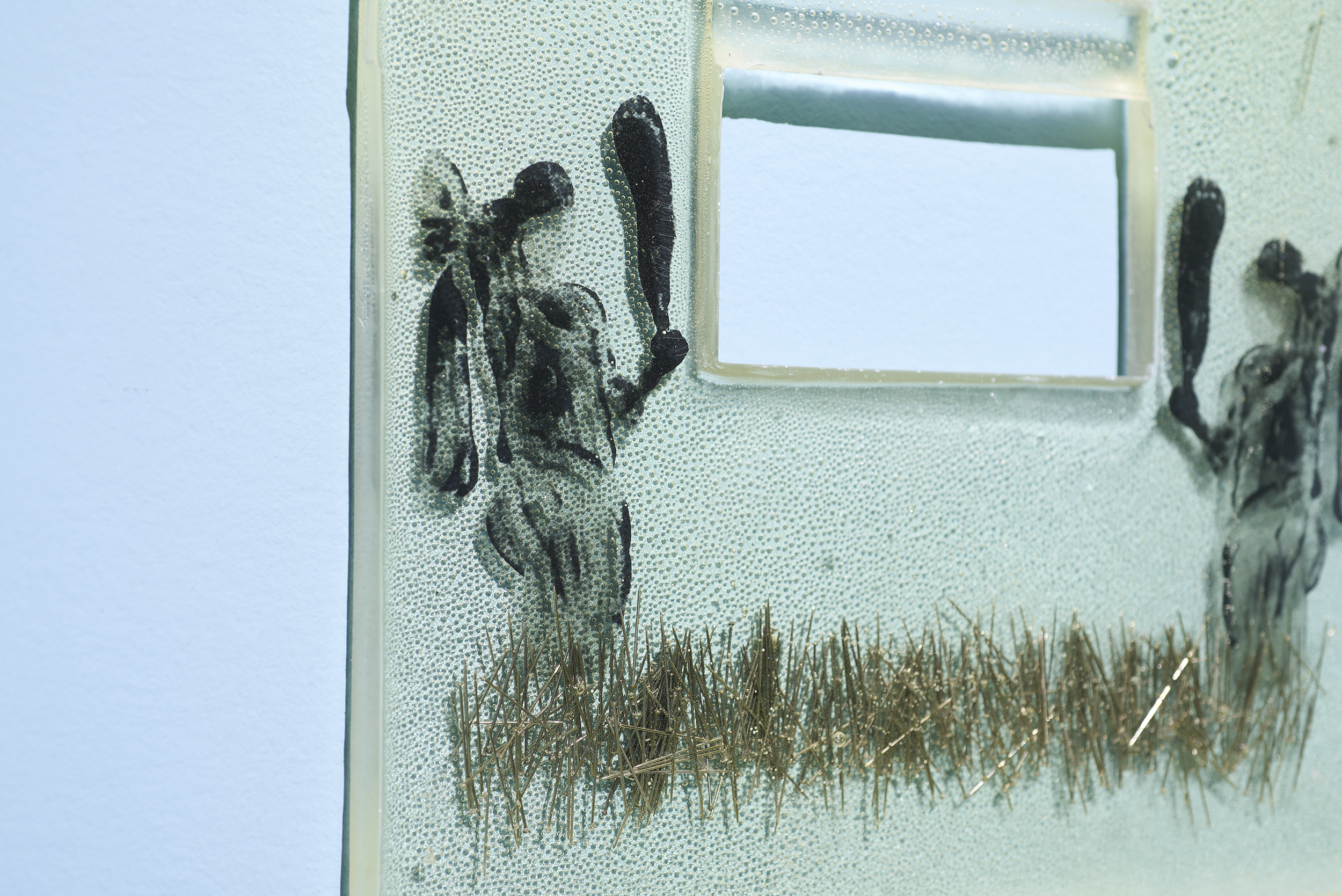
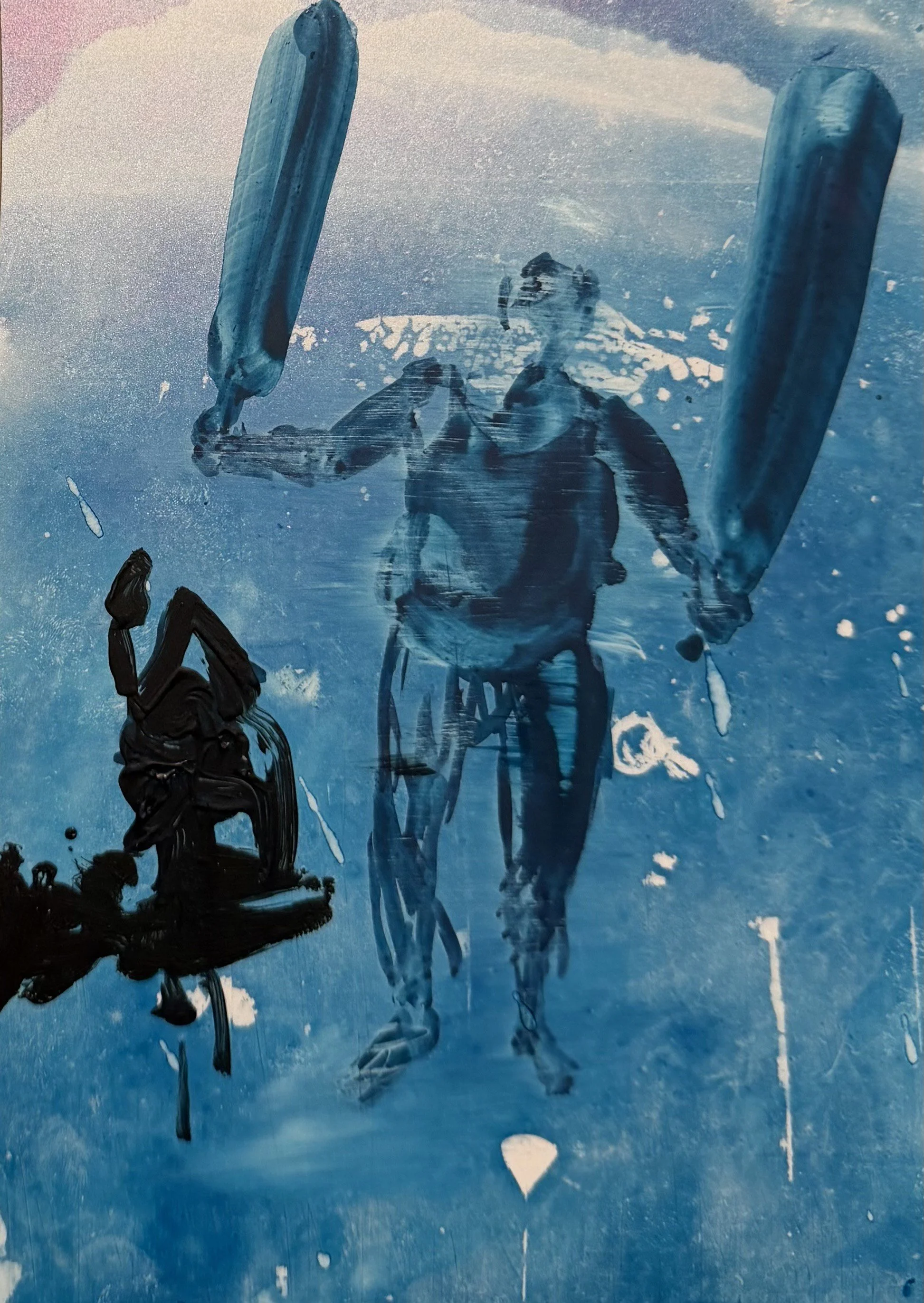
The walls are adorned with sculptures of sang that contain drawings and photographs of women performing zurkhaneh training; these elements are washed in blue ink, echoing the underwater movements and environment of the video work. Sketches that depict tools of the zurkhaneh and bodies of differing types being surveilled by seated figures while in movement within these watery landscapes, alluding to the constant eye cast on women and their actions in Iran.
Through her exploration of the zurkhaneh, Pirhadi demonstrates how traditional structures of control can be reimagined as sites of resistance. The Pit represents just one of the restrictions and regulations on women’s bodies, choices, and activities in Iran. Pirhadi sees the creation of this space as an act of defiance against the larger societal pressures on women in Iran as well as a broader critique of patriarchal and authoritarian ideas that continue to encroach upon individual freedoms in North America and around the world.
Artist Biography
Nasim Pirhadi is a multidisciplinary artist whose work incorporates video, sound, olfactory elements, performance, and sculpture to create multisensory experiences. Based in Kelowna, British Columbia, Pirhadi explores culturally sensitive topics within the complex socio-political landscape of her home country of Iran. Through a research-driven approach, she engages with feminist perspectives on identity and subjectivity. Pirhadi has exhibited internationally, participating in exhibitions across Canada, Germany, Austria, England, Sri Lanka and the United States. In 2017, she was presented with the Selected Award at the Third Contemporary Drawing Festival in Iran and was a finalist for the Behnam Bakhtiar Award in Monaco, France. In 2022, she was awarded the Audain Travel Award for research in New York.
A D D I T I O N A L R E S O U R C E S
Nasim Pirhadi
Meel Geraftan (Meel Exercise), 2025
ink on Yupo paper
20 × 15 cm
photo courtesy of the Artist